Table of Contents
Blood sugar levels can change throughout the day depending on food, physical activity, stress and other factors. Because of this, a single blood sugar reading may not always provide a complete picture of your blood glucose control.
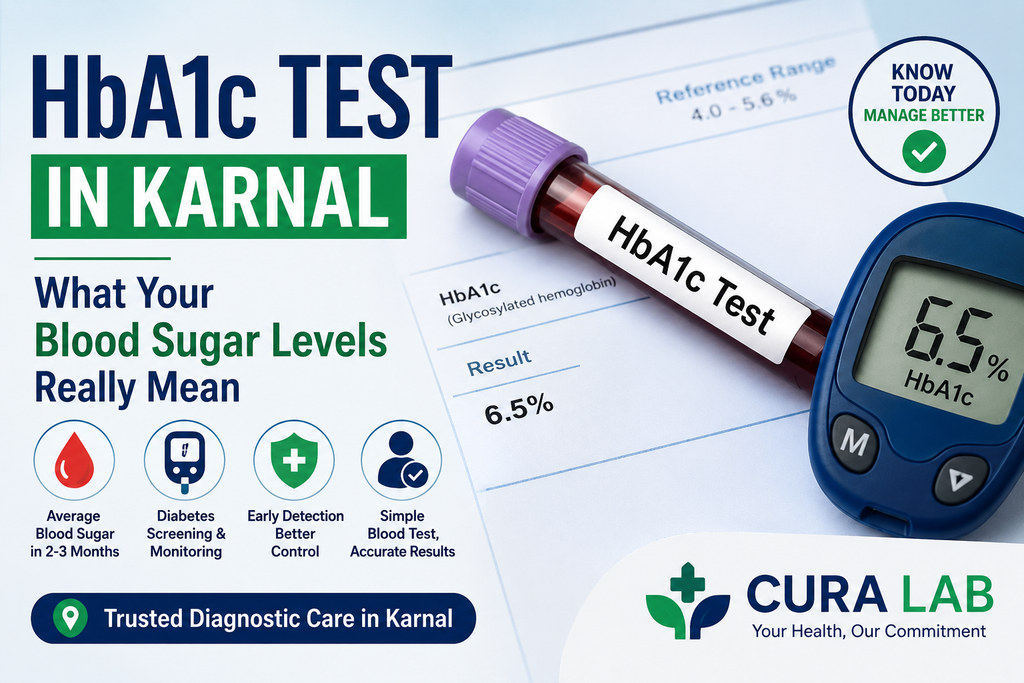
An HbA1c Test in Karnal provides a broader view by showing your average blood sugar level over approximately the past two to three months. It is commonly used to screen for prediabetes and diabetes and to monitor blood sugar control in people who already have diabetes. CDC: A1C Test Information
If you have been advised to monitor your blood sugar or are concerned about diabetes, an HbA1c test can provide useful information about your long term blood glucose levels.
What Is an HbA1c Test?
HbA1c, also called A1C or glycated hemoglobin, is a blood test that measures the percentage of hemoglobin in your red blood cells that has glucose attached to it.
Unlike a blood sugar test that measures glucose at one particular moment, an HbA1c Test provides an estimate of your average blood sugar levels over the previous two to three months.
This makes HbA1c testing useful for diabetes screening, prediabetes detection and ongoing blood sugar monitoring.
Why Is the HbA1c Test Important?
Diabetes can develop gradually, and some people may not experience noticeable symptoms in the early stages. Testing can help identify changes in blood sugar levels and allow appropriate medical evaluation.
An HbA1c test can help:
- Screen for prediabetes
- Screen for type 2 diabetes
- Monitor blood sugar control
- Understand longer term blood sugar patterns
- Help healthcare professionals evaluate diabetes management
Because HbA1c reflects average blood sugar over several months, it provides information that a single glucose reading cannot provide.
For more information about diabetes testing, you can refer to the CDC diabetes testing guide.
What Do HbA1c Levels Mean?
HbA1c results are generally reported as a percentage. The commonly used ranges are:
| HbA1c Level | What It Generally Indicates |
|---|---|
| Below 5.7% | Normal |
| 5.7% to 6.4% | Prediabetes |
| 6.5% or above | Diabetes |
A result of 6.5% or above falls within the diabetes range used for diagnosis. However, diagnosis should be made by a qualified healthcare professional and may require additional testing depending on the situation. CDC: A1C Test Information
If you already have diabetes, your individual HbA1c target may be different depending on your health, age and treatment plan. Your healthcare professional can help determine the appropriate target for you.
Do You Need to Fast for an HbA1c Test?
Usually, fasting is not required for an HbA1c Test.
You can generally have an HbA1c test at any time of the day. However, if your healthcare professional has ordered other blood tests along with HbA1c, such as certain glucose or cholesterol tests, fasting may be required for those tests.
Always follow the preparation instructions provided by your healthcare professional or diagnostic laboratory.
Who Should Consider an HbA1c Test?
Your healthcare professional can determine whether an HbA1c test is appropriate based on your health and risk factors.
Testing may be recommended if you:
- Have risk factors for type 2 diabetes
- Have previously been diagnosed with prediabetes
- Have symptoms associated with high blood sugar
- Have a family history of diabetes
- Have overweight along with other diabetes risk factors
- Have diabetes and require regular monitoring
The CDC recommends diabetes screening for adults aged 45 and above and for younger adults who have overweight along with additional risk factors. CDC: Diabetes Testing Recommendations
HbA1c vs Fasting Blood Sugar
HbA1c and fasting blood sugar tests provide different types of information.
A fasting blood sugar test measures your glucose level after fasting and provides a snapshot of your blood sugar at that particular time.
An HbA1c test estimates your average blood sugar level over the previous two to three months.
Your healthcare professional may recommend one or both tests depending on your symptoms, medical history and reason for testing.
How Is an HbA1c Test Performed?
An HbA1c test requires a small blood sample. A healthcare professional collects the sample, usually from a vein in your arm, and sends it to the laboratory for analysis.
The process is generally quick and does not require special preparation when HbA1c is the only test being performed.
What Can Affect HbA1c Results?
Although HbA1c is a useful test, certain health conditions can affect the accuracy of the result.
Conditions such as severe anemia, kidney disease, liver disease, certain blood disorders, recent blood loss and blood transfusions may affect HbA1c results in some circumstances. CDC: A1C Test Information
If you have an existing medical condition or are taking medication, inform your healthcare professional before interpreting your results.
HbA1c Test in Karnal at CURA LAB
If you are looking for an HbA1c Test in Karnal, CURA LAB provides diabetes testing as part of its diagnostic services.
You can explore CURA LAB Diagnostic Services to learn more about the laboratory’s available tests and health packages.
HbA1c is also included in CURA LAB’s Advanced Health Package and Premium Health Package. The Advanced Health Package is listed at ₹1,499, while the Premium Health Package is listed at ₹1,999.
CURA LAB also offers home sample collection for eligible diagnostic tests in Karnal. This can be particularly convenient for people who have difficulty visiting a laboratory.
Frequently Asked Questions
For more information, visit CDC A1C Test Information .
You can check the available testing options through CURA LAB’s Diagnostic Services .
Book an HbA1c Test in Karnal
Understanding your blood sugar levels can be an important part of maintaining long term health. If your healthcare professional has recommended an HbA1c test or you need regular diabetes monitoring, getting tested at a reliable diagnostic laboratory can make the process convenient.
CURA LAB provides diagnostic testing and health checkup services in Karnal, along with home sample collection for eligible tests.
To explore the laboratory and its services, visit CURA LAB.
For additional information about diabetes testing and HbA1c, you can also refer to the CDC diabetes testing resources.